Maritime Safety · IIoT · Industry 4.0
A new era of maritime safety
A Safer, More Productive and Sustainable World with SOL-X
4,000
Man-hours saved
98%
Crew satisfaction
100+
Vessels deployed
↓ 62%
Alert response time
Role
Lead UX Designer
Timeline
3 Months
Tools
Figma
Team
2 UX · 10 Devs · 1 PM · 4 POs
Overview
SafeVUE is an Industry 4.0 Permit To Work digital solution for ship managers to improve operational safety at sea. It replaces legacy paper-based SMS compliance systems with a real-time digital platform that connects the bridge, deck, and shore.
Mission
Design an intuitive, safety-critical platform that empowers crew and shore-side officers to manage permits, hazards, and safety audits in real time — in environments with limited connectivity, extreme conditions, and zero tolerance for UI errors.
Platform
One platform. Three pillars.
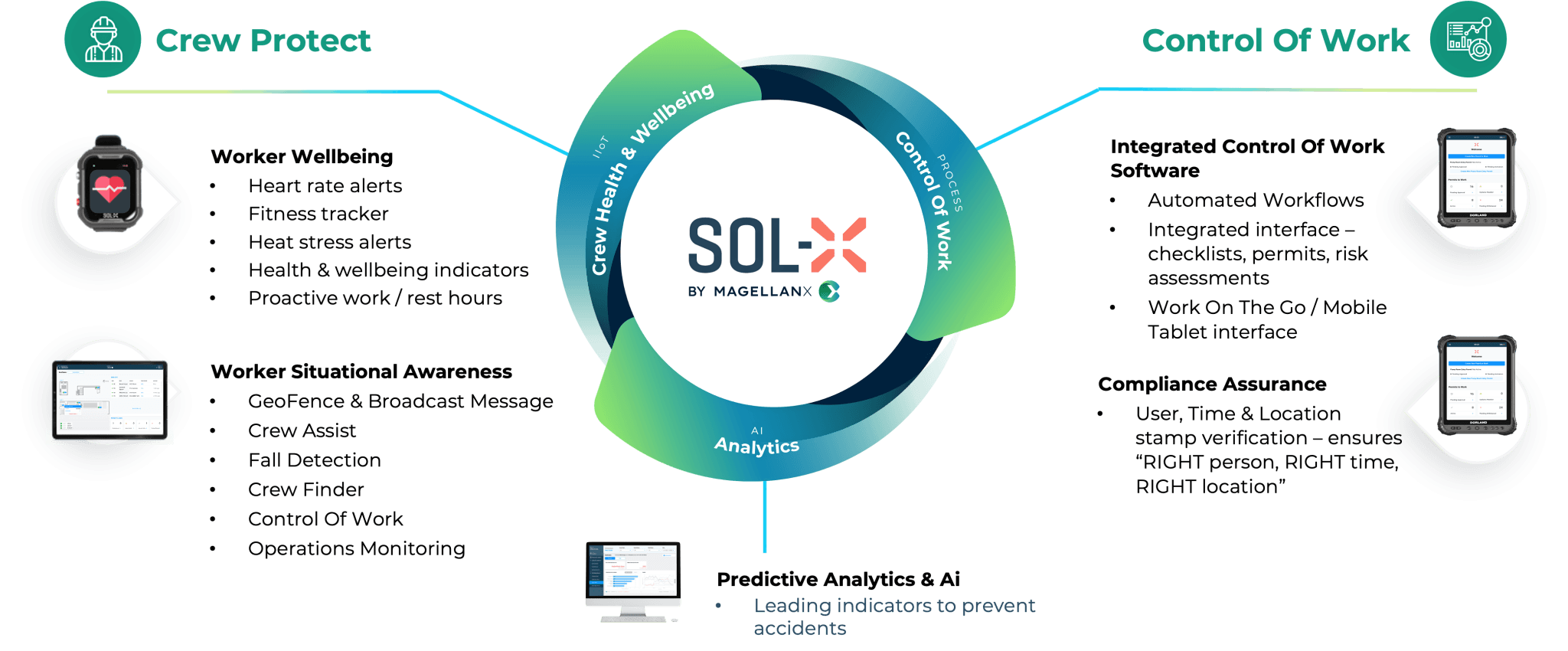
SOL-X by MagellanX brings together three interconnected layers of maritime safety into a unified platform — spanning the wrist, the deck, and the shore.
IIoT
Crew Protect
Wearable biometric monitoring for crew health and wellbeing at sea.
Process
Control Of Work
Digital Permit To Work workflows replacing paper-based SMS compliance.
Intelligence
AI Analytics
Leading indicators that surface risk patterns before incidents occur.
Hardware
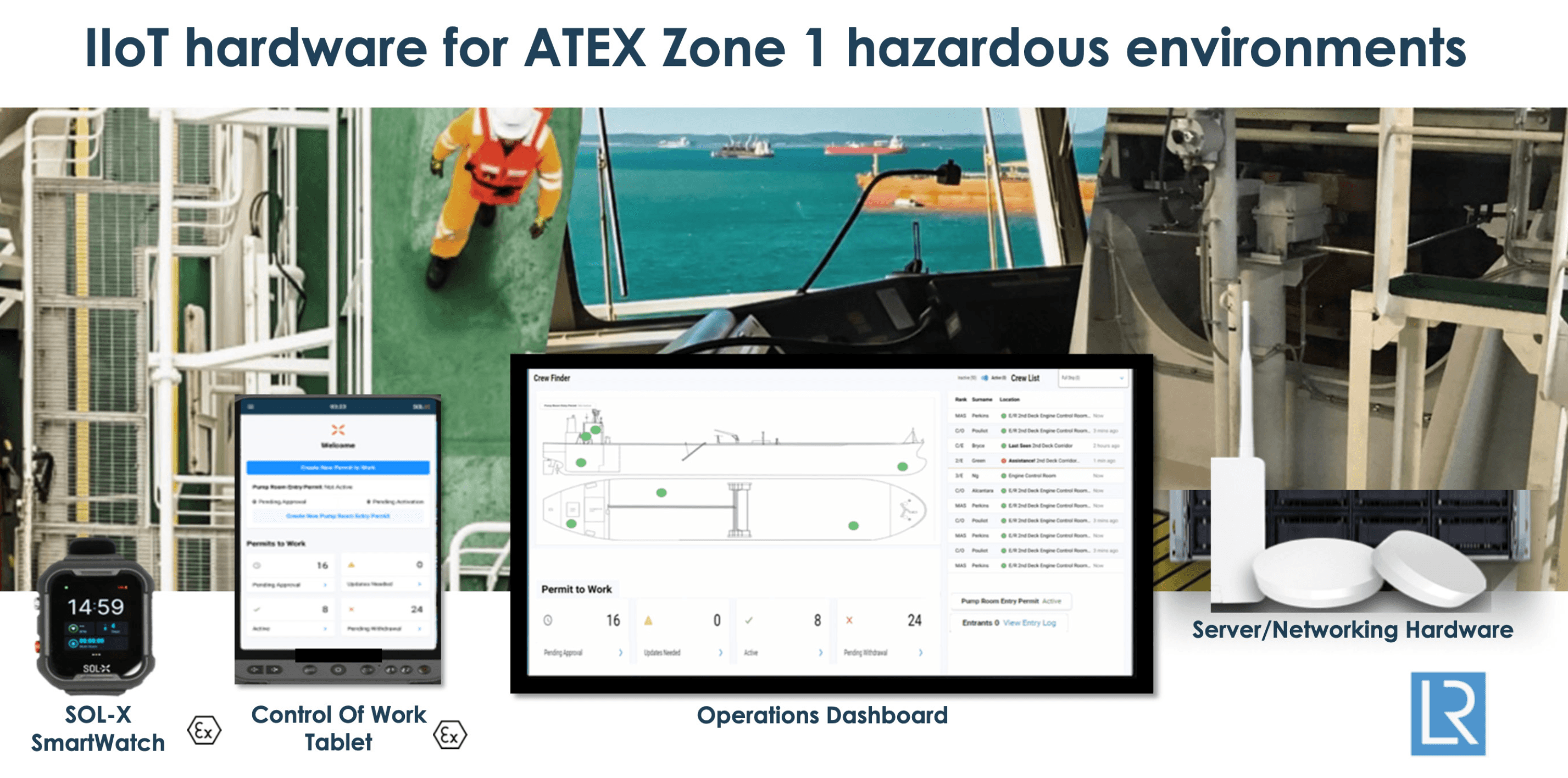
Designed for ATEX Zone 1 hazardous environments
Every device in the SafeVUE ecosystem is ATEX Zone 1 certified — the most demanding hazardous area classification in maritime and industrial environments. The UX had to work across all four surfaces, in harsh conditions, with gloves on.
SOL-X SmartWatch
ATEX Zone 1 wearable for crew biometric monitoring and distress alerts.
Control Of Work Tablet
Ruggedised ATEX tablet for permit issuance and sign-off on deck.
Operations Dashboard
Large-format bridge display for fleet-wide situational awareness.
Server / Networking Hardware
Onboard edge computing with Lloyd's Register certification.
The Challenge
Four core operational problems
Designing for safety-critical environments is unforgiving — a confusing alert hierarchy or slow interface could have real-world consequences. We identified four systemic failures in the legacy approach.
SMS Compliance
Ship Safety Management System compliance was paper-based, error-prone, and difficult to audit remotely.
Operational Visibility
Shore-side managers had no real-time view of what was happening on vessels.
Siloed Systems
Safety data lived in disconnected spreadsheets, email chains, and physical logbooks.
Disconnected Info Flow
Crew on deck had no efficient way to flag hazards or escalate safety concerns to the bridge.
Industry Context
The scale of the problem
20,000
Maritime casualties per year
$29B
Global maritime insurance market
66%
Of incidents attributed to human factors
With 1.7 million seafarers affected globally, improving safety through better tooling is not just a UX problem — it's a humanitarian one.
Research
Empathise / Discover
We went onboard. Understanding real usage required getting off the computer and onto vessels and industrial sites — observing crew under actual working conditions, not simulated ones.
Crew Perspectives
Interviewed crew who had been using the wearable solution on active vessels.
Quantitative analysis of watch log data to identify usage and drop-off patterns.
Observed users at an industrial site that had recently adopted the solution.
Expert Insights
Interviewed subject matter experts from maritime and Oil, Gas & Chemical (OAG) sectors who had transitioned to shore-based safety roles.
Senior safety officers responsible for safety policy across multiple fleets and sites.
Mapped the gap between what regulations require and what tools actually support.
Design Process
Information architecture & user flows
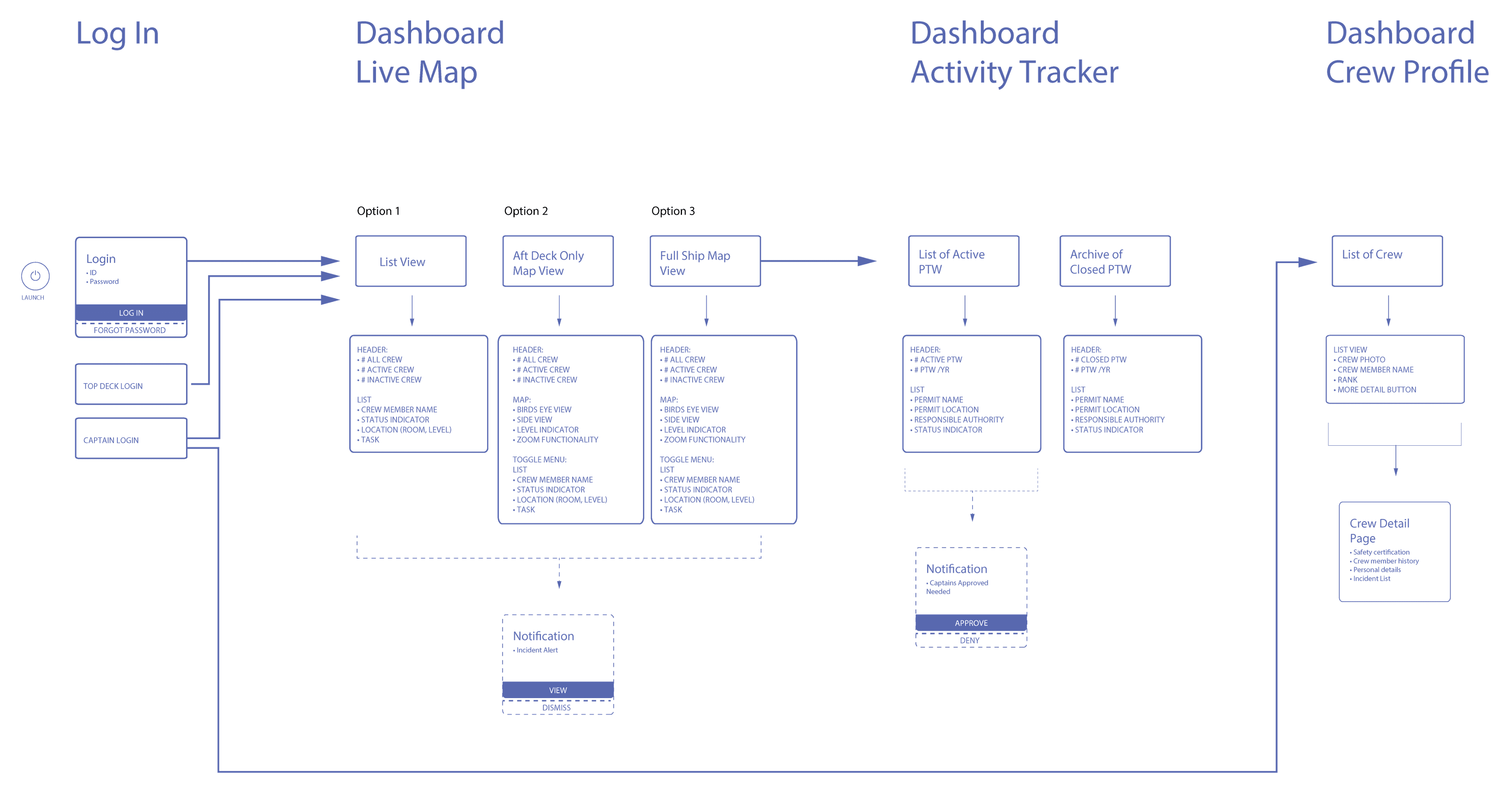
Before designing a single screen, we mapped the full information architecture. The dashboard serves three distinct user roles — crew, deck officers, and shore-based safety managers — each with different permissions and priorities.
Three Live Map variants
List View, Aft Deck Only, and Full Ship Map — letting users choose the right spatial model for their context.
Activity Tracker split
Active Permits To Work separated from the closed archive, reducing cognitive load in high-pressure situations.
Crew Profile drill-down
Captains get a single view of certifications, history, and incident log per crew member.
Non-blocking notifications
Alert flows are dismissable and designed not to interrupt active work unnecessarily.
Product Demo
See SafeVUE.ai in action
The Solution
Real-time vessel monitoring
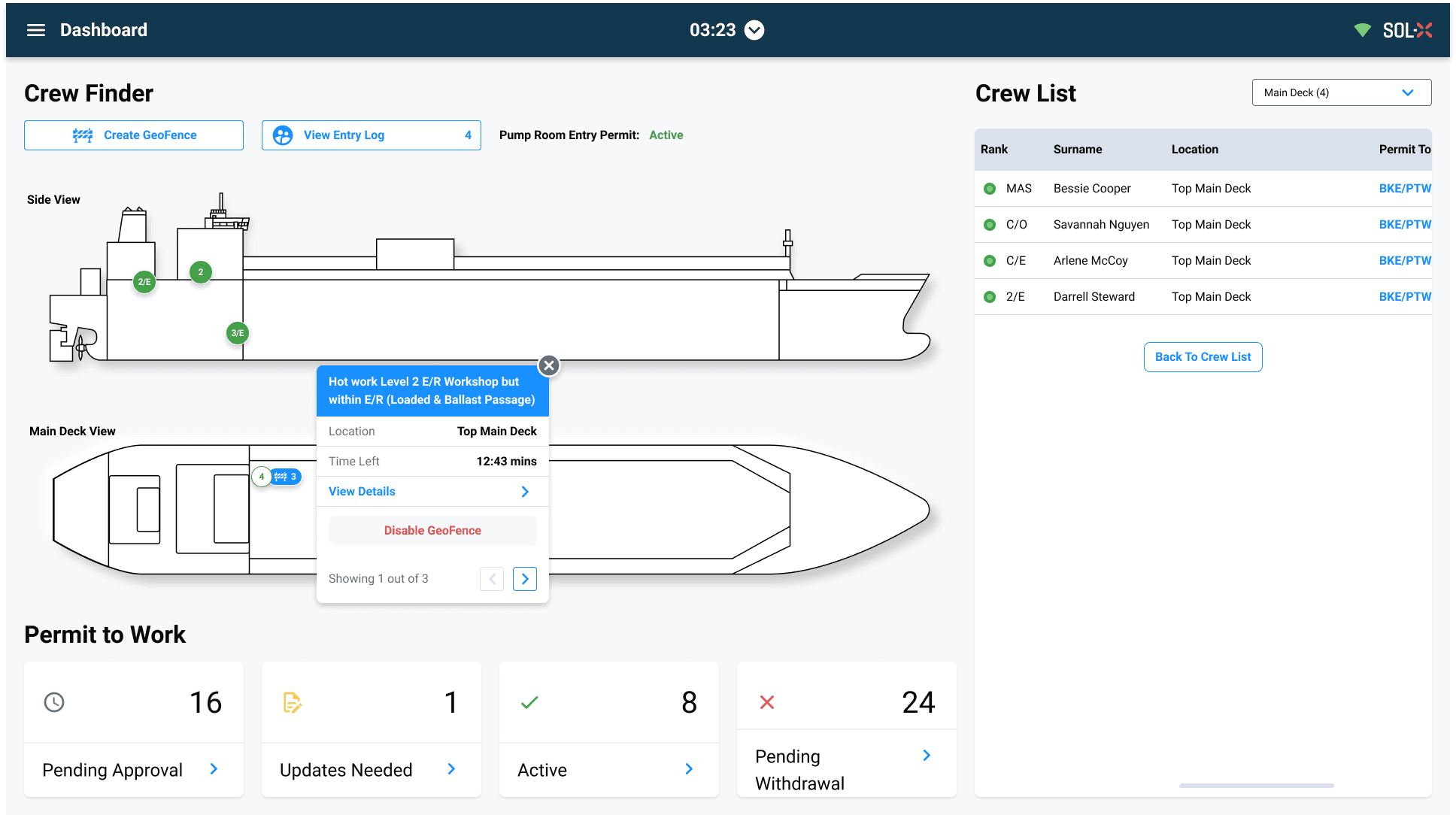
We designed a command-center dashboard for fleet safety officers, giving them a single-pane-of-glass view of all vessel safety activities.
Real-time permit status across all active work orders
Drill-down from fleet overview to individual vessel to individual crew member
Offline-first data architecture — dashboard degrades gracefully when satellite connectivity drops
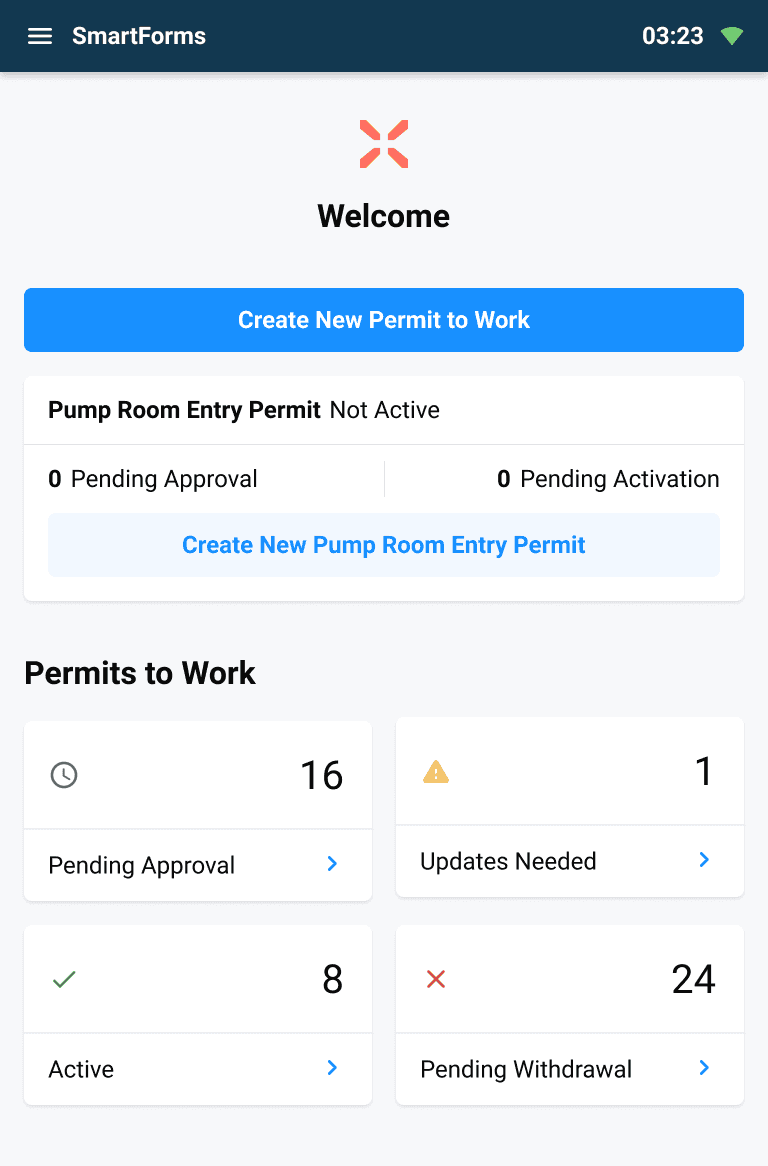
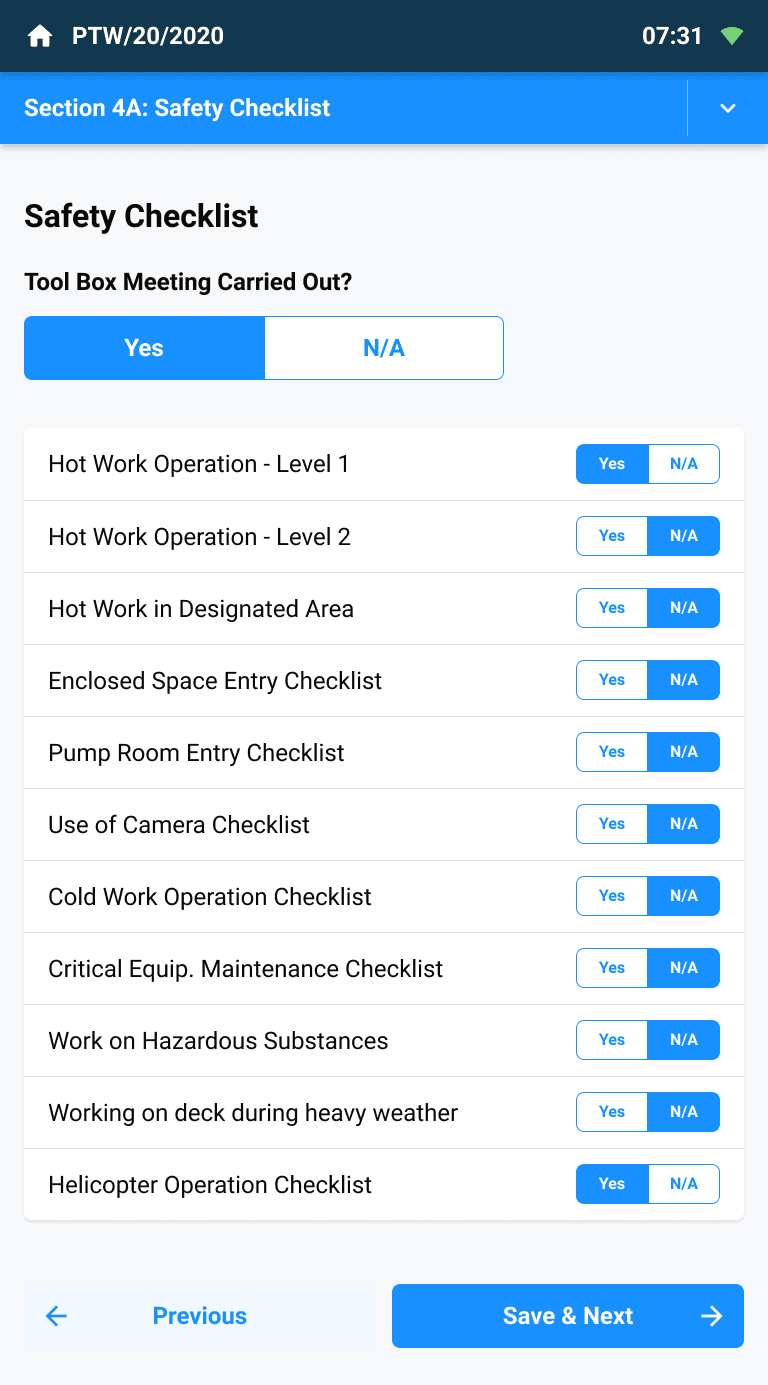
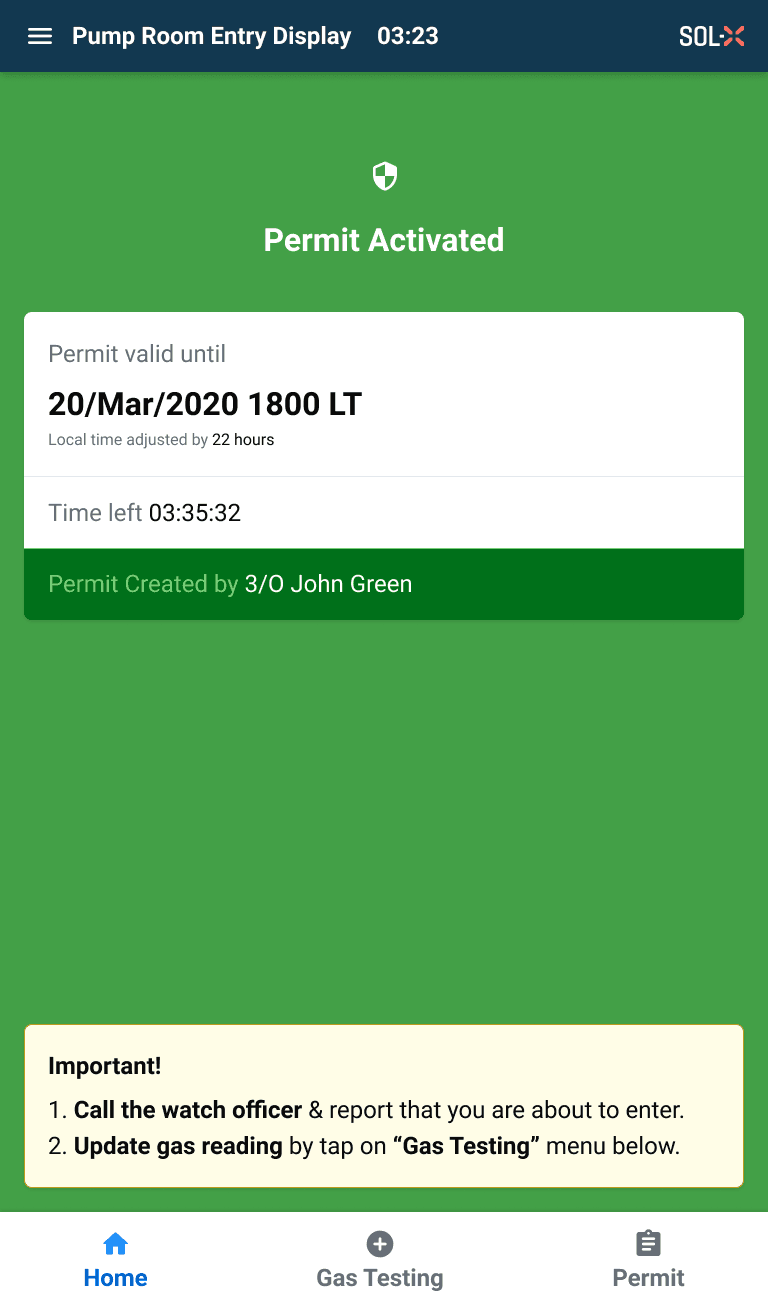
Mobile App
Designed for the deck
The mobile app gives crew an efficient, glove-friendly interface for permit requests, hazard reporting, and safety briefings.
48dp minimum touch targets for gloved operation
High-contrast alert system visible in direct sunlight
Offline mode with sync-on-connect for low-bandwidth satellite environments
Outcomes
Measurable impact at sea
4,000
Man-hours saved
Per vessel per year
98%
Crew satisfaction
Post-deployment survey
100+
Vessels deployed
Globally across 3 regions
↓ 62%
Alert response time
vs legacy paper system
Reflections
What I learned
Designing for safety-critical environments demands a different level of rigour. Every interaction decision — the colour of an alert, the wording of a confirmation — has potential real-world consequences. Contextual research onboard vessels (not just in a lab) was non-negotiable. Understanding the physical environment — glare, noise, gloves, time pressure — fundamentally shaped the design system.
Next Steps
Following launch, the roadmap included: predictive safety alerts using vessel sensor data and AI pattern recognition; integration with port authority reporting systems to reduce administrative overhead; and expansion to the company's sister platform for environmental compliance (MARPOL reporting).
Next Case Study
Insurtech · Insurance